
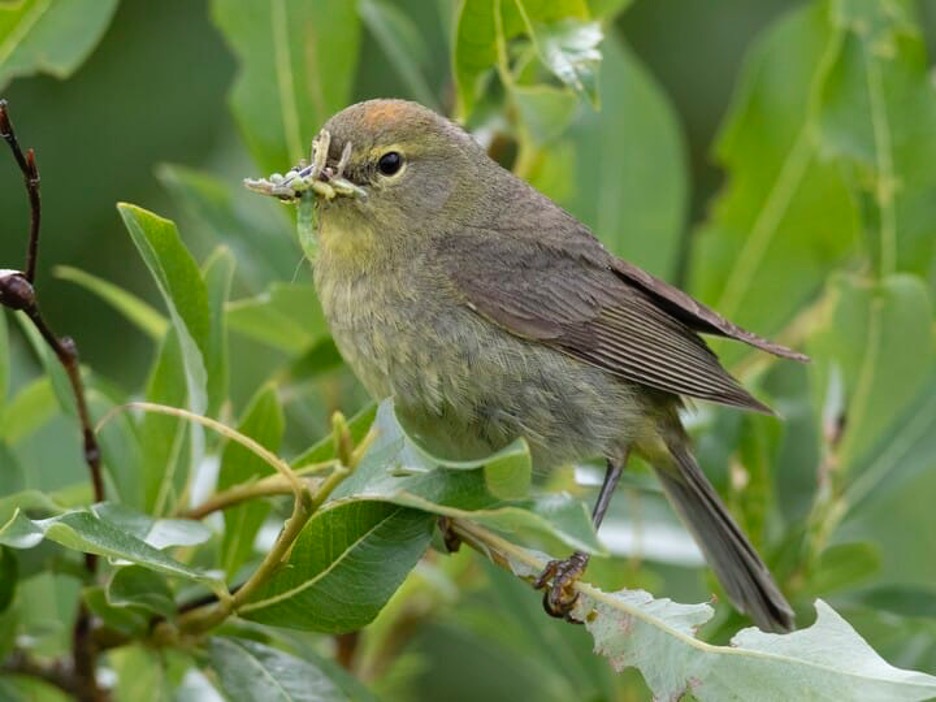
Orange-crowned Warbler (Leiothlypis celata)
This tiny songbird is most common in our region from October through March, though its camouflage makes it easy to overlook. Identification of the orange-crowned warbler is somewhat challenging, even to the more experienced birdwatcher, due to the subdued, olive yellow appearance and difficult to distinguish namesake orange crown. The most common way to differentiate them from other species is to observe their bright yellow undertail coverts. Up close, you may also observe a pale eye ring broken by a blackish streak across the eye.
Orange-crowned warblers build their nests at ground level, making eggs especially susceptible to predation from reptiles and small mammals. They use their thin, sharp bill to scrounge through forest floor leaves while they forage for food. Their winter diet tends to consist of fruits and nectar, although they can sometimes be found visiting backyard hummingbird feeders or feeders offering fruit, peanut butter, or suet blocks.
 Orange-crowned Warbler. Photo Credit: James A. Giroux
When listening for the orange-crowned warbler, keep an ear out for a high pitched trill which varies based on if the warbler is attempting to claim territory or attract a mate. Breeding males have been known to create “song neighborhoods” by learning and mimicking the songs of males in neighboring territories.
Compiled by Lainee Hooks. Sources include All About Birds; The Cornell Lab and the Audubon Field Guide.
Header image credit: Brian Sullivan


