On November 17, 2026, Save Our Springs Alliance sent a letter to city council undersigned by Travis Audubon and other environmental leaders urging city council to permanently protect Brackenridge Field Lab in the negotiations for the Brackenridge Development Agreement:
Dear Mayor Watson, City Manager Broadnax, and Members of the Austin City Council,
We, the undersigned individuals and organizations, urge the City of Austin to permanently protect Brackenridge Field Laboratory (BFL). Council must slow this process down and require changes to the proposed agreement before approval with explicit protections for BFL’s land, habitat, and ecological resources.
BFL is a one-of-a-kind resource in a one-of-a-kind city. Its 82 acres lie along the Colorado River, minutes from downtown. Woodlands, meadows, wetlands, and the river provide high-quality habitat with incredible biodiversity, including species that one won’t find elsewhere in urban Austin. Its habitat and site-specific research cannot be replaced, moved, or recreated elsewhere. Yet the City and the University of Texas are rushing amendments to the 1989 Brackenridge Development Agreement that threaten its future.
We support preserving Lions Municipal Golf Course, but saving one must not sacrifice the other. Austin owes its success to nature. It is the connection with water, trees, and local wildlife that has made Austin unique. Nature strengthens our economy. Our springs, trails, and green spaces draw visitors and support local businesses. We cannot buy or build replacements for these natural resources. Our only choice is to protect what we have.
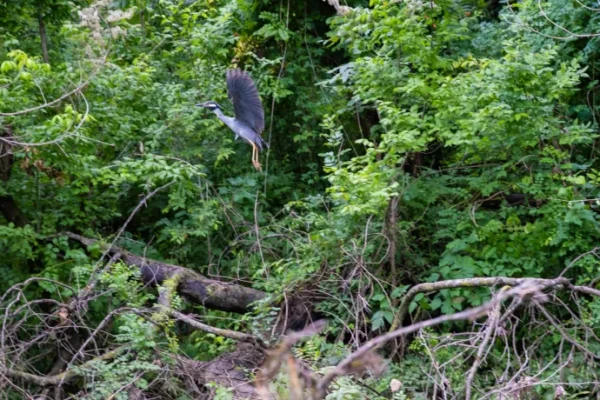
Protecting BFL means protecting habitat within an interconnected ecosystem that supports the rest of Austin and the Colorado River. The site provides rare, high-quality habitat for local wildlife in an otherwise growing and urbanizing city. Its recorded diversity approaches 3,000 species: 2,222 insects, 475 plants, 171 birds, 40 fish, 32 reptiles, 20 mammals, and 9 amphibians. The insect counts include 1,130 butterfly and moth species and 294 bee species. Birds range from warblers, sparrows, and flycatchers to hawks, owls, kingfishers, and herons. Reptiles include 11 turtle species, 8 lizard species, and 13 snake species. Mammals, fish, frogs, toads, and salamanders add to this diversity. Redevelopment of BFL threatens where this wildlife finds food and shelter, where pollinators interact with flowering plants, and where aquatic and terrestrial life meet. Austin has few such spaces left. We must protect this one.
BFL is also a living classroom. Researchers and staff share knowledge through public talks, school visits, bird walks, and volunteer opportunities. These experiences help us understand local ecology and learn how habitats function, recover, and thrive. Decades of research reveal how habitats and wildlife change over time. That work deepens our understanding of invasive species and ecological resilience in the face of climate change. Its value depends on studying the BFL lands over time. Moving the laboratory would lose that ecological history. Incentivizing the development of BFL puts both the outdoor classroom and this accumulated knowledge at risk.
As we understand the proposal, the amendments would expand terms for private development on the Brackenridge Tract, including land occupied by BFL. But protecting Muny’s fairways and BFL’s habitats can be complementary goals, and we ask that the City advocate for both. Approval should wait until the agreement protects BFL. The undersigned organizations therefore urge the City to take the following actions:
1. Refrain from approving the amendment until June 2027. Allow time to revise the agreement and secure explicit protections for BFL before approval. Before Council acts, hear from BFL scientists, University faculty and students, schools, volunteers, and community users. Give them time to review the proposal and help identify the protections BFL needs. If necessary, separate the BFL provisions from the Muny conveyance. Resolve each on its own merits.
2. Expressly exclude BFL’s existing footprint, natural areas, and riparian zones from the expanded development rights. Work with the University to secure permanent, enforceable protections that reserve these areas for research, education, and conservation. Put those protections in the agreement before approval.
3. Support the Environmental Commission’s recommendations. Please consider Austin Environmental Commission’s unanimous recommendations. Their recommendations offer measures necessary to protect BFL, the Colorado River, and the wildlife that rely on these spaces, including a 300-ft. setback (with no impervious cover) to protect riparian areas, dark skies, and bird-friendly building standards.
Austin should not have to choose between Muny and BFL. Both deserve to be saved. Slow down. Revise the agreement. Protect BFL before approval. We stand ready to work with the City, the University, and the community to preserve its land and ecological integrity. Please help keep BFL a place of research, education, and conservation for generations to come.
Respectfully,
Bobby Levinski
Senior Staff Attorney
Save Our Springs Alliance
Caley Zuzula
Program Manager to Interim Executive Director
Travis Audubon Society
Kaiba White
Climate Policy Specialist
Public Citizen
Robin Rather
Environmentalist
Dr. Craig Nazor
Conservation Chair
Sierra Club, Austin Regional group
Susana Almanza
Director
PODER
Brian Zabcik
Advocacy Director
Save Texas Streams
Want to learn more? Check out this article published November 24 by KXAN.
If you would like to voice your opinion on changes to the Brackenridge Development Agreement, we encourage you to contact City Council before December 3rd. Let City Council know that the BFL is worth protecting!
Featured image: Eric Henrikson/KXAN