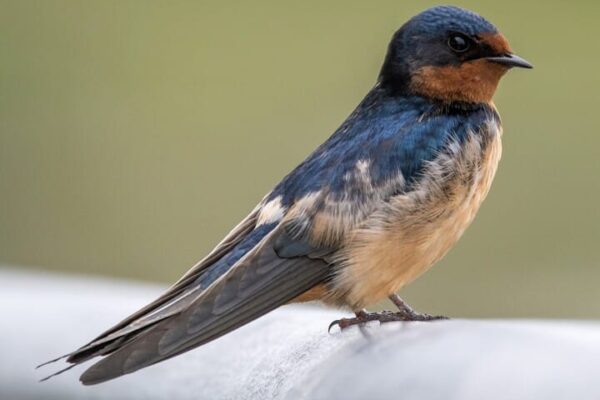
Photo Credit: Luke Franke/Audubon
By Lily Rerecich.
It is a startling thing to see a bird hit a window. Since they are full of momentum from flight, the impact of the collision is forceful. But for most birds, it’s lethal. It’s estimated 54-76% of window collisions are fatal, and in the U.S. alone, anywhere between 365 million up to nearly 1 billion birds die from window collisions annually. Thankfully, we can prevent these tragic casualties by taking a few simple measures. Here is how to do it:
One of the most effective ways to stop birds from hitting windows is to simply put something on the glass that birds will see. The problem behind day-time window collisions is that birds see the reflection in the window and fly towards it without seeing the glass. You can prevent this by using material to create a visual barrier to birds. Methods include:
- Visual/material barriers such as bug screens, blinds, and curtains (partially or fully closed).
- Applying patterns of grids or dots using tape or paint, spaced closely together, so the birds do not try to fly between them.
- A variety of decals are available for windows, but they must be closely spaced (4-10 inches) for them to effectively deter birds.
- One-way transparent film, which makes your window appear opaque from the outside, while allowing anyone inside to see clearly.
These solutions are provided at Collidescape, an excellent resource for bird strike mitigation. These are unobstructive solutions, and do not impact your use of the window.
If a bird does hit your window, and is stunned, then carefully place it in a covered box (with air holes) to recover in a warm, dark, and safe space. It may take minutes or up to over an hour. When the bird is ready to come out (it may scratch or flap inside the box), carefully take the box (without opening it inside!) outside to let it fly away. If it does not fly away, let it recover longer.
It is important to clarify that a bird attacking a window is different from an inadvertent window collision. During the breeding season, many birds establish territories which they defend against rivals. Male birds of some species will sometimes confuse their own reflection with a challenger and attempt to fight with it. This is usually non-lethal, and less of a problem – it will dissipate as the breeding season ends. For example, one year, there was a Cardinal who fought his reflection in the side mirror of my neighbor’s pick-up truck repeatedly. He was unharmed. If you want to prevent this, you can take measures to reduce reflectivity, such as applying a plastic film or cloth to your window.
While window collisions seem rare in individual buildings, they are a frequent and serious problem overall. According to the American Bird Conservancy, almost 50% of bird collisions are on residential windows. All of them are preventable. By taking these actions to protect birds from window collisions, you are doing more than making your home more bird-friendly. You are making an impact – the kind that we want.